
Are you looking for a unique and challenging multi-day hike? The Long Range Traverse in Gros Morne National Park is one of my favourites. It’s a premier backpacking route in Atlantic Canada, offering a true wilderness experience on Newfoundland’s rugged west coast. This is not a trail for beginners — solid backcountry skills, confidence with navigation, and a good dose of grit are essential to see it through.

Last Updated: January 2, 2026
In August, I finally made it to Newfoundland for the first time and set out to hike the Long Range Traverse over four days. I connected with three other hikers on social media and, along the way, welcomed a solo traveller into our merry group. After a successful trip, I wanted to share everything I learned to help others plan their own Long Range Traverse adventure. Keep reading to find out more.
This post includes affiliate links. If you make a purchase through one of the links, I may receive a percentage of the sale at no extra cost to you.
Long Range Traverse Map
Download Parks Canada’s Long Range Traverse hiking map to familiarize yourself with the topographic details and overall route. I also recommend picking up a physical Gros Morne National Park backcountry map from the Rocky Harbour Visitor Centre — just note that you’ll need to draw the Long Range Traverse route onto it yourself. Always carry a paper map and compass in the backcountry as a reliable backup to your digital navigation tools.
About the Long Range Traverse

Location: Gros Morne National Park, Newfoundland and Labrador
Distance: 35 km point to point
Difficulty: Difficult
Elevation: 700 m elevation gain
Time: 4 days / 3 nights
Dog-friendly: Not recommended. Bon Tours does not allow dogs on their boats.
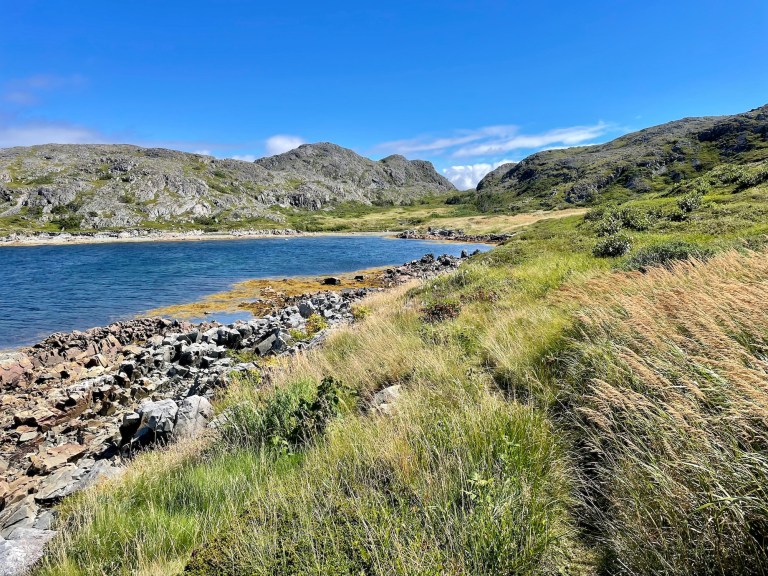
Features: The Long Range Traverse winds through stunning arctic-alpine terrain, offering a challenging but rewarding backcountry experience. Along the route, hikers may spot caribou and moose and take in expansive views of fjords, hills, lakes, and ponds (at least when the fog cooperates). Completely unmarked and unmaintained, this is a rugged wilderness hike that demands strong navigation skills and earns every bit of its payoff.
UPDATE: Reservations for the Long Range Traverse start on Wednesday, February 11, 2026 at 8:30am NT.

Long Range Traverse FAQs

Q. Where is the Long Range Traverse located?
A. The Long Range Traverse is a multi-day hiking route located in Gros Morne National Park on the west coast of Newfoundland. The Long Range Mountains are the tip of the Appalachian Mountain Range.
Q. How long is the Long Range Traverse?
A. The official distance of the Long Range Traverse is 35 km, though several reports suggest the route is closer to 50 km.
Q. How difficult or advanced is the Long Range Traverse?
A. The Long Range Traverse is an unmarked and unmaintained backpacking route that requires navigation skills and backcountry camping know-how. This route is not recommended for novice backpackers.
Q. I have never completed a multi-day hike. Should I consider the Long Range Traverse?
A. I would not recommend the Long Range Traverse for anyone who hasn’t already completed a multi-day backpacking trip. There are several different options for beginner backpackers.
Q. Is there really no trail on the Long Range Traverse?
A. That’s right—the Long Range Traverse does not have an established trail. Sure, some sections have a footpath from previous hikers (like Western Brook Pond gulch), but you won’t find any signage or trail infrastructure until Ferry Gulch. Parks Canada provides a recommended route that requires wilderness navigation skills.
Q. Is there a navigation test for the Long Range Traverse?
A. No, there isn’t a navigation test. In the past, hikers were required to pass a serious navigation test before getting a permit. Today, there’s a mandatory orientation designed to ensure hikers know what they’re getting into.
Q. How many days should I plan on the Long Range Traverse?
A. 4 to 5 days is enough time to complete the Long Range Traverse. Some hikers finish in three days or less. Personally, I wouldn’t plan less than four days as I like spending more time in the backcountry.
Q. What can I expect while hiking the Long Range Traverse?
A. You can expect inclement weather (wind, rain, fog), cold days and nights, wet feet, gnarly tuckamore, and long, hard days. You can also expect awe-inspiring landscapes, fresh air, descent campsites, and relative solitude. Prepare for the worst. If you get anything else, that’s something to celebrate!
Q. Can I hire a guide for the Long Range Traverse?
A. Yes, there are several guides who can facilitate your Long Range Traverse trek, including Gros Morne Adventures, Katie Broadhurst from Outdoors and On the Go, and others.
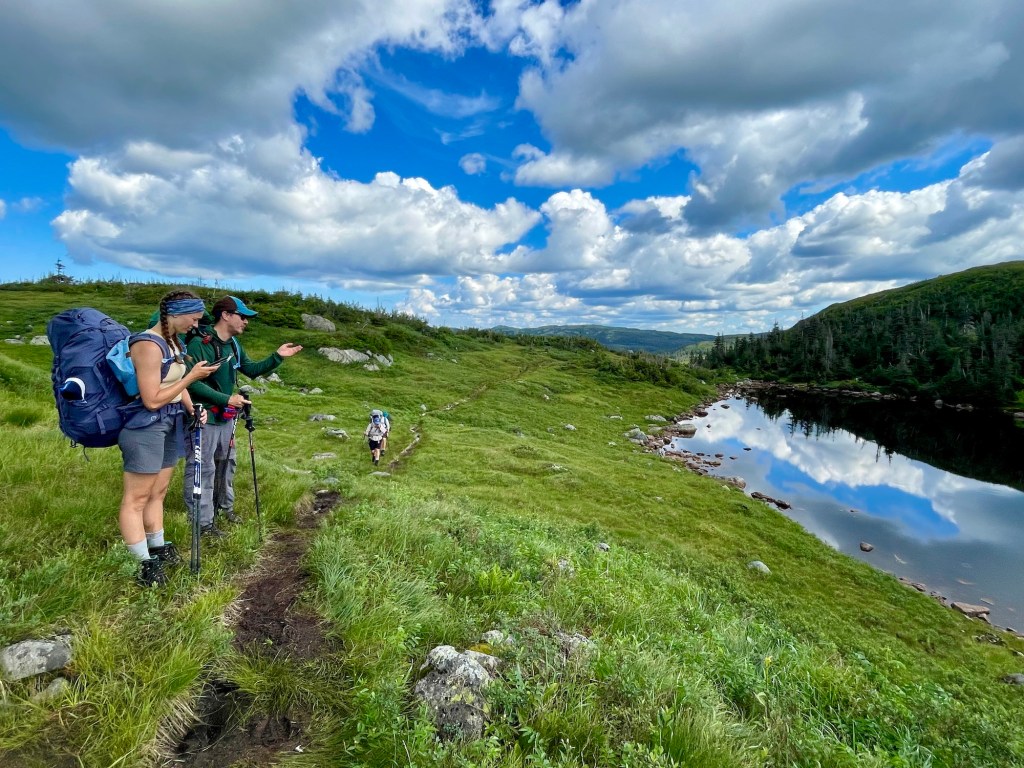
Should You Hike the Long Range Traverse?

Is the Long Range Traverse for you? That’s a question to ask yourself. Do your research before committing, and consider your wilderness experience and skills. Depending on what you’re looking for, the Long Range Traverse could be the trip of a lifetime. For some, it could be biting off more than they’re ready to chew.
I love the backcountry. And I have some wilderness knowledge and skills and have become comfortable with my abilities (and am constantly learning). Even so, I’m not immune to mental and physical exhaustion on multi-day treks. Problems can quickly arise when cold, wet, tired, hungry, and down-right exhausted hikers also lack wilderness and navigation know-how. Something to think about.
If you’re still unsure, Parks Canada has some useful resources for hikers considering the Long Range Traverse. Check out the Long Range Traverse Route Description and Hiker Preparation Guide. Hopefully, the information in this guide will also help you make your decision, and also check out my day-by-day descriptions on the Long Range Traverse.

When To Hike the Long Range Traverse

Reservations for the Long Range Traverse are available between June 25 and September 30. Based on my experience, I’d heartily suggest visiting in mid-August. While we faced inclement weather at the beginning and end of our trip, most of our days were sunny and warm (20 degrees Celsius). Other hikers reported dryer and warmer temperatures in early August. Anytime in July or August should be fine.
Remember, this is Newfoundland. You’ll be hard-pressed to find four or five straight days of sunshine (no matter when you visit). Come prepared and have an adventure!
Read next: Green Gardens Trail: Hiking in Gros Morne National Park
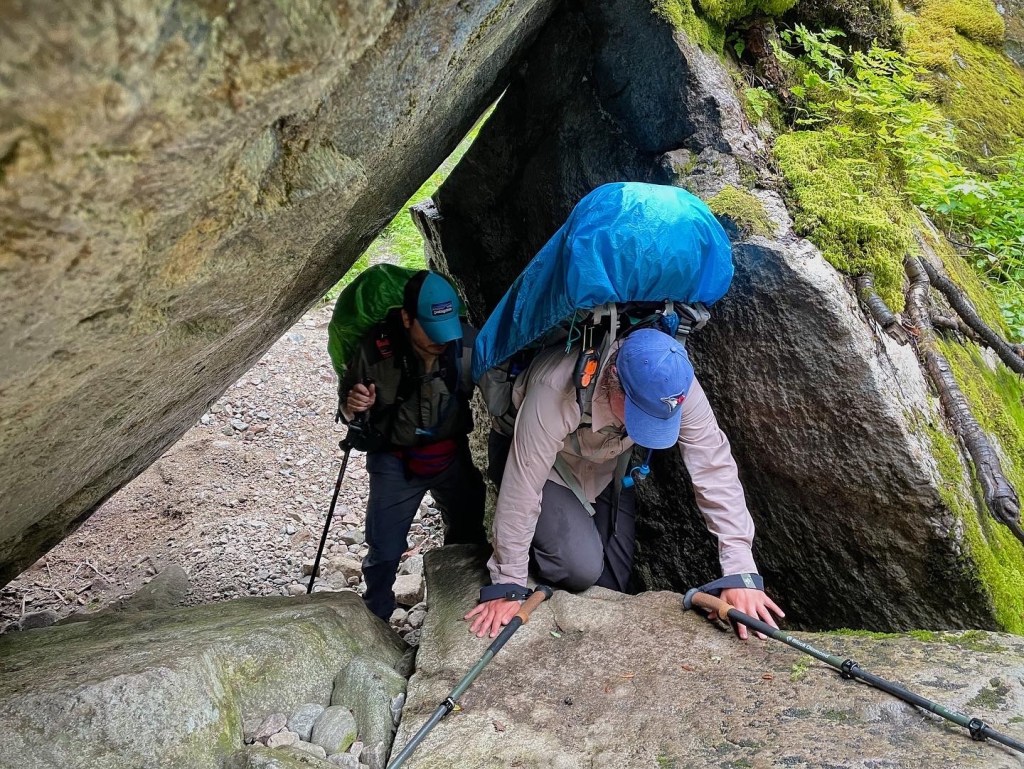
How to Reserve the Long Range Traverse

Advanced reservations are required to hike the Long Range Traverse. You can’t book individual campsites, but instead reserve access to the backcountry route. Only 3 groups (maximum 4 people per group) are permitted each day. This quota system promotes high-quality hiking and helps minimize environmental impact.
Book your Long Range Traverse dates by calling 1-709-458-2417. Reservations open in February for the season from June 25 to September 30. Campsites are first come, first serve.
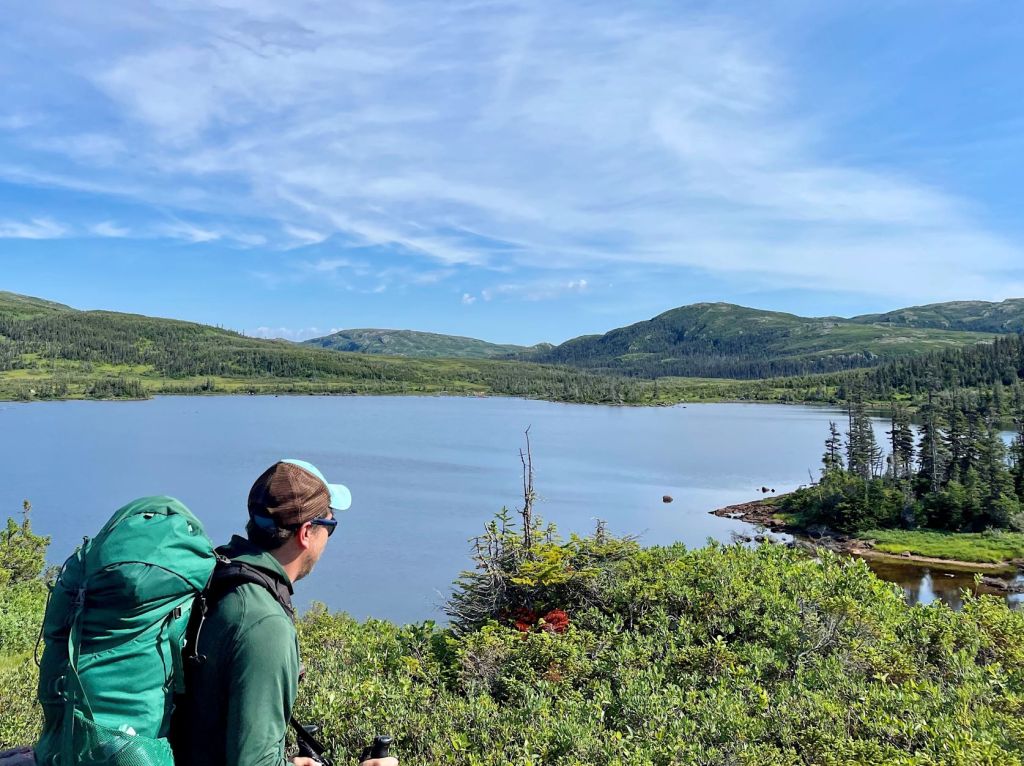
Long Range Traverse Cost & Fees

Here are the basic costs for the Long Range Traverse:
| Reservation Fee | $24.50/group |
| Wilderness Hiking Fee | $89/person |
| Western Brook Pond Boat Shuttle | $42/person |
| National Park Entry Fee or Parks Canada Discovery Pass | $10/person/day $70 for 7 days $139.40 |
| Gros Morne Backcountry Map | 24.95 plus tax |
If you’re not from Newfoundland, you will also need to consider the cost of transportation to the province. I booked a roundtrip ferry from North Sydney, Nova Scotia to Port Aux Basques, Newfoundland through Marine Atlantic for about $342 (passenger and vehicle). Then I drove about 3.5 hours to Rocky Harbour. Another option is to fly into Deer Lake and drive to Gros Morne National Park (about an hour).
Read next: Your Complete Guide to the West Coast Trail on Vancouver Island

Mandatory Orientation (What to Expect)

All hikers must participate in a mandatory orientation session at 2:30pm the day before starting the Long Range Traverse. No navigation test required. However, hikers need route-finding and wilderness navigation skills. Orientation sessions are held at the Parks Canada Visitor Centre (1 Eastlink Rd) in Rocky Harbour.
At the orientation, you will hear about trail conditions, safety and emergency evacuation protocols, and other information relevant to your trip. If you don’t already have an emergency signal device, Parks Canada will provide a SPOT. You will also pick up your wilderness hiking permit and can purchase the Gros Morne backcountry map.

Where To Stay in Rocky Harbour (Before & After Your Hike)

Due to the mandatory orientation, you will need a place to stay the night near Rocky Harbour before starting the Long Range Traverse. To support this project, Parks Canada generously provided a complimentary rustic cabin at Berry Hill Campground which was quite comfortable (thank you, Parks!). Berry Hill, Lomond, and Trout River campgrounds are all nearby in Gros Morne Park. In Rocky Harbour, the Adventure Hostel is one of the budget-friendly options.
Thanks to Parks Canada for contributing to my backcountry adventure, including a complimentary stay in a rustic cabin. Together with Parks, I aim to help hikers have a safe and memorable experience on the Long Range Traverse.

How To Get to the Long Range Traverse
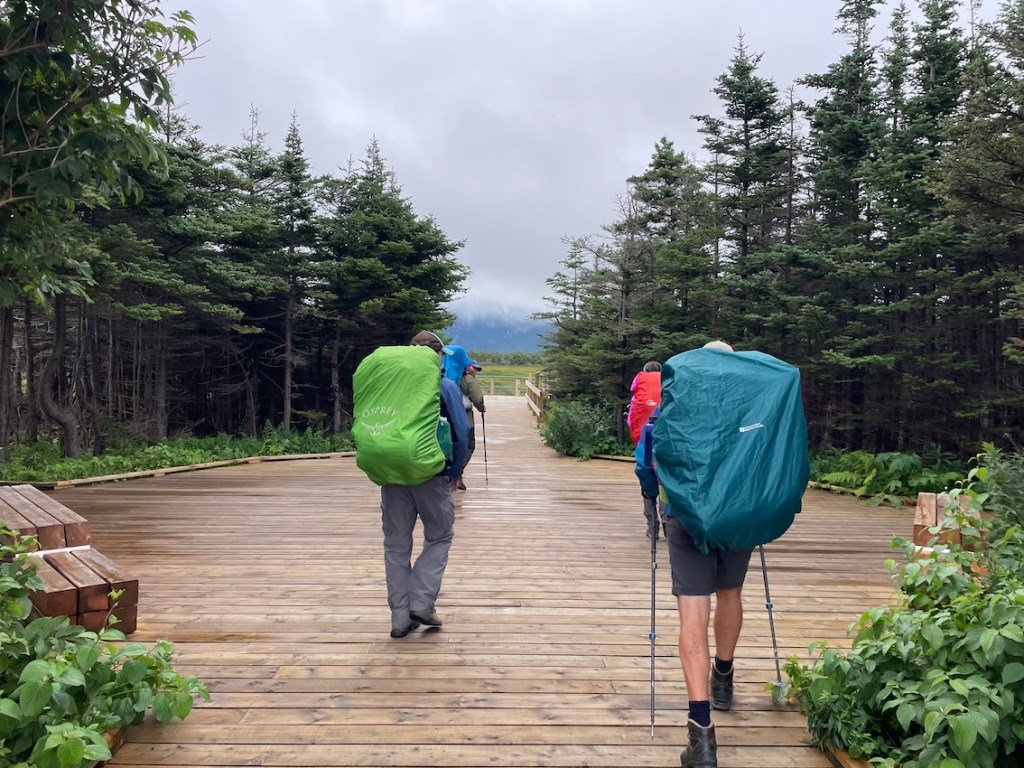
The Long Range Traverse trailhead is accessed through Western Brook Pond. First, if you have more than one vehicle, leave a car in the Gros Morne Mountain parking lot. Then drive your second vehicle to Western Brook Pond parking area and leave your second vehicle there. If you have just one vehicle, arrange a shuttle with Pittman’s Taxi (709 458-2486) or another service. Western Brook Pond parking area has toilets as well.
Read next: Jasper Skyline Trail: 3 Days Backpacking in the Rockies

Western Brook Pond Boat Shuttle

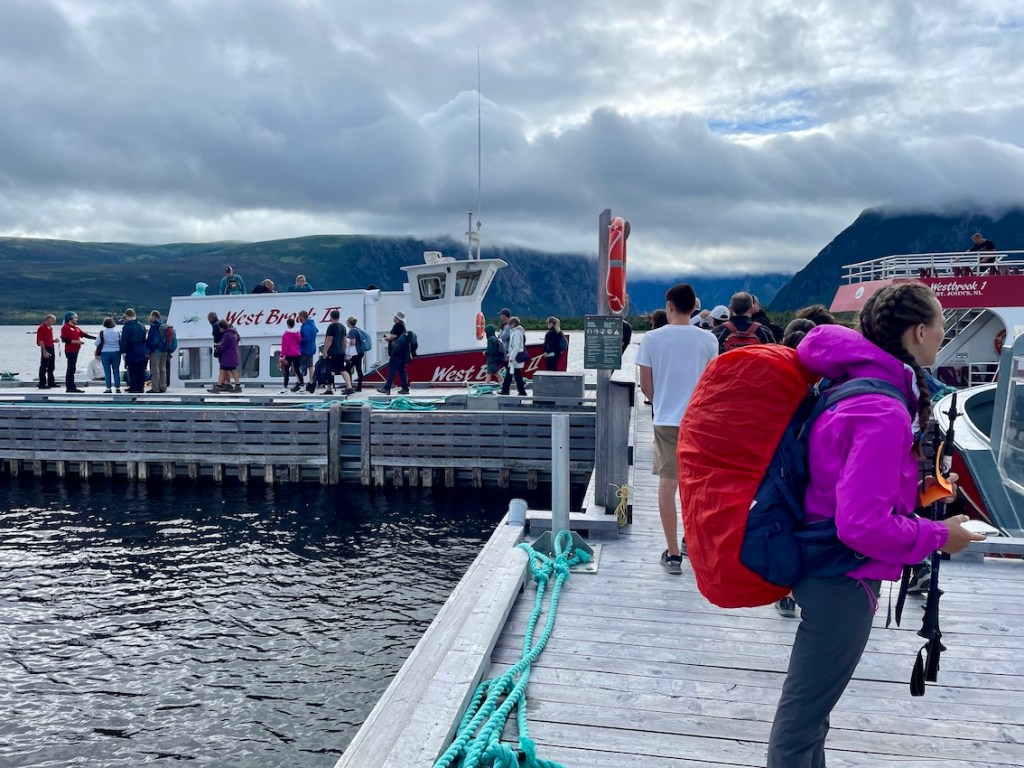
When planning your Long Range Traverse adventure, it’s important to book your BonTours boat shuttle early. BonTours offers hiker drop-offs alongside their regular Western Brook Pond tours, with most passengers visiting for the day. We booked the 10am shuttle and arrived at the trailhead in about an hour.
To reserve your spot, visit bontours.ca and select “Western Brook Pond Tour.” During checkout, add your group number under “Long Range Traverse Drop Off,” then choose your date and preferred time. Tickets are $37.50 plus tax per person (subject to change). For questions or special requests, you can email info@bontours.ca.
Note: BonTours shuttles are weather-dependent. Our first shuttle was cancelled due to high winds, and we rescheduled for the following day. It’s wise to build a buffer day into your itinerary in case conditions delay your departure.
4-Day Long Range Traverse Itinerary
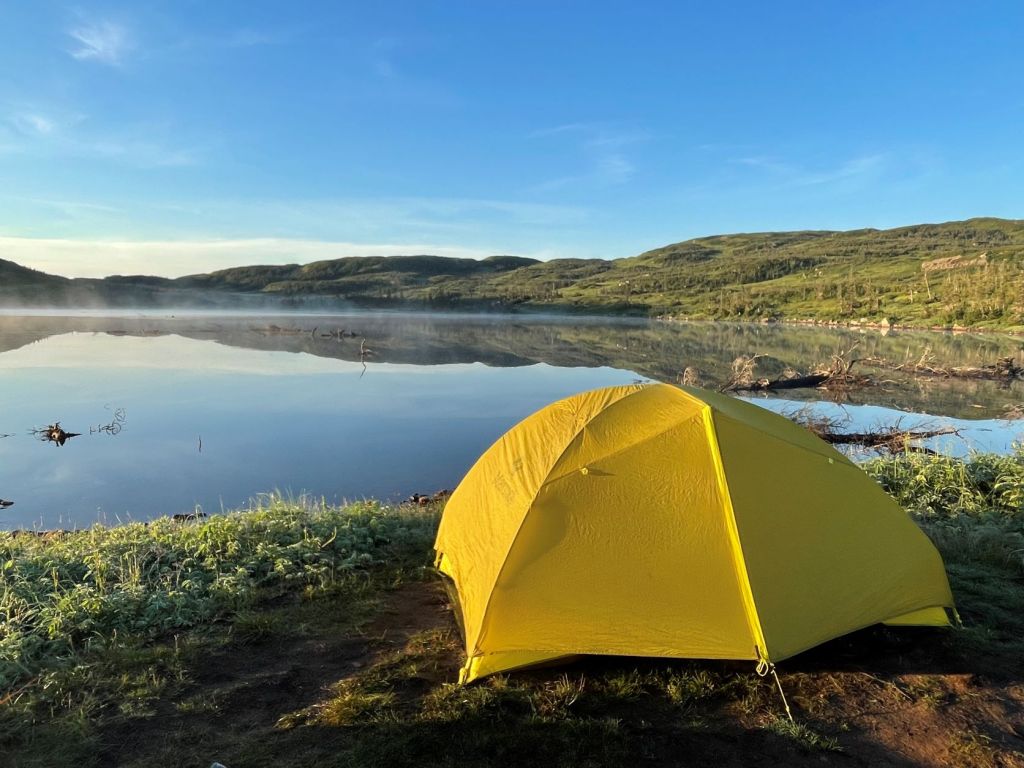
Here is our 4-day itinerary for the Long Range Traverse:
Day 1 — Western Brook Pond to Marks Pond (10 KM)
Day 2 — Marks Pond to Hardings Pond (4.5 KM)
Day 3 — Hardings Pond to Lower Green Island Pond (7 KM)
Optional: Bakers Brook Pond Side Trip (5 KM)
Day 4 — Lower Green Island Pond to Gros Morne Mountain Trailhead (13 KM)
Optional: Gros Morne Mountain Side Trip (5.5 KM)
We had planned to stay at Little Island Pond, but the campground was full when we arrived. Marks Pond was a nice alternative but made for a longer first day.
Want to take a slower pace? Here’s a 5-day itinerary:
Day 1 — Western Brook Pond to Little Island Pond (6.5 KM)
Day 2 — Little Island Pond to Hardings Pond (8 KM)
Day 3 — Hardings Pond to Lower Green Island Pond (7 KM)
Day 4 — Lower Green Island Pond to Ferry Gulch (5.5 KM)
Day 5 — Ferry Gulch to Gros Morne Mountain Trailhead (7.5 KM)
Are you a fast backpacker? Here’s a 3-day itinerary:
Day 1 — Western Brook Pond to Marks Pond (10 KM)
Day 2 — Marks Pond to Lower Green Island Pond (11.5 KM)
Day 3 — Lower Green Island Pond to Gros Morne Mountain Trailhead (13 KM)
Not ready for the Long Range Traverse? Consider an overnight at Ferry Gulch:
Day 1 — Gros Morne Mountain Trailhead to Ferry Gulch Campground
Day 2 — Ferry Gulch to Gros Morne Mountain Trailhead (via Gros Morne Mountain)
Read next: 4-Day Long Range Traverse Hike in Gros Morne National Park

Long Range Traverse Distances

| KM | Location | Description |
|---|---|---|
| 0 | Western Brook Pond Parking | Paved parking area, outhouse toilet |
| 1 | Western Brook Pond Boat Shuttle | |
| 4 | Top of Western Brook Gorge | Nice viewpoint |
| 6.5 | Little Island Pond Campground | 3 tent sites, pit toilet, food storage locker |
| 10 | Marks Pond Campground | 3 tent sites, pit toilet, food storage locker |
| 14.5 | Hardings Pond Campground | 5 tent platforms, pit toilet, food storage locker |
| 21.5 | Lower Green Island Pond Campground | 3 tent platforms, pit toilet, food storage locker |
| 21.75 | Upper Green Island Pond Campground | 3 tent platforms |
| 27 | Ferry Gulch Campground | 3 tent platforms, outhouse toilet, food storage locker, bear hang, picnic tables |
| 34.5 | Gros Morne Mountain Trailhead | Paved parking area, outhouse toilet |

Navigation on the Long Range Traverse

Navigation skills are essential on the Long Range Traverse. If you’ve never used a map and compass in the wilderness, take the time to practice on other routes before committing to this hike. You should be comfortable with concepts like declination and taking bearings using a topographic map and compass. While many hikers rely on GPS for day-to-day navigation, you should carry a paper map and compass as a backup (electronics can fail). Parks Canada provides a Long Range Traverse GPX file that you can download and upload to your GPS device.
Navigation on the LRT isn’t always straightforward, especially when tuckamore enters the picture. Never heard of tuckamore? I hadn’t either before heading to Newfoundland! Tuckamore is a dense, low-lying forest that’s nearly impossible to hike through, under, or over. These gnarly, wind-shaped trees can be major obstacles. Whenever possible, avoid tuckamore entirely. If you do need to pass through it, look for a game trail.
If you’re not confident with navigation, it’s worth taking time to learn and practice before your trip. Consider hiking with a group where at least one person has solid backcountry navigation experience, or hiring a guide through Gros Morne Adventures or Katie Broadhurst from Outdoors and On the Go.
Note: Thick fog and rapidly changing weather can make navigation extremely challenging. There may be times when the safest decision is to stay put and wait for conditions to improve.

Long Range Traverse Safety & Risk Management

The Long Range Traverse is an unmaintained, remote wilderness route. At least one person in your group should have wilderness first aid training and carry a well-stocked first aid kit (I modified an Adventure Medical Kit for this trip). If you’re hiking solo, wilderness first aid and solid backcountry navigation skills aren’t optional — they’re essential.
Before heading out, prepare a detailed trip plan and leave it with a trusted friend or family member. Include where you’re going, who you’re hiking with, your planned route, and when you expect to return. Be clear about what they should do if you don’t check in or return as planned.
Blackflies and mosquitoes are common, and they can be relentless. We were lucky not to have many at our campsites, but some in our group still walked away with plenty of bites. I managed well with bug spray and, when needed, long sleeves and pants. It’s worth packing After Bite and a bug jacket, and if you’re prone to allergic reactions, bring antihistamines as well. Depending on the year and conditions, bugs in the Long Range Mountains can be thick.
Note: Check out adventuresmart.ca to learn what to include in your trip plan.
Emergency Rescues on the Long Range Traverse

Every year, Parks Canada conducts emergency rescues on the LRT. In some cases, it can take 24–48 hours for help to arrive or longer. Historically, some rescues could have been avoided with better preparation or more conservative decision-making. Emergency rescues are costly, put responders at risk, and should only be requested when necessary. Minor issues such as blisters, sore feet, bug bites, fatigue, running low on food, or wildlife encounters do not warrant an emergency rescue.
So, when is an emergency rescue appropriate? If a hiker is seriously injured and cannot safely continue, do not hesitate to signal for help. Any life-threatening situation warrants evacuation. After triggering an emergency signal, provide first aid, keep the injured person warm and hydrated, and remain in one location. Emergency rescue costs are covered by Parks Canada.
During the mandatory orientation, Parks Canada will provide a SPOT satellite communication device. Do not hike without a reliable way to signal for help (I personally use a Zoleo). The emergency contact number for Gros Morne National Park is 1-877-852-3100.

Food & Meals on the Long Range Traverse

When it comes to food, I usually bring freeze-dried meals for supper and oatmeal or instant potatoes for breakfast. Lunches are kept fairly light — things like pita wraps with peanut butter work well. I recommend packing plenty of high-calorie snacks (nuts, protein bars), as you’ll burn more calories than usual while hiking and staying warm. I also carry water enhancers with electrolytes for hydration (like Nuun). For easy organization, I pack all my food in a 20-litre SealLine lightweight dry bag inside my backpack.
Greywater from cooking or washing dishes should be buried at least 30 metres from water sources and campsites. Don’t dump greywater into pit toilets — food residue can attract animals. Use biodegradable soap for dishes to minimize environmental impact.
Remember: pack it in, pack it out. There are no garbage cans on the LRT, and nothing should be left behind at camp or along the route — including fruit peels, toilet paper, or hygiene products. Pit toilets and food lockers are not for garbage. Practice Leave No Trace principles and help protect wildlife and this fragile ecosystem.

Toilets & Waste Disposal

Pit toilets are available at designated campgrounds along the route. These toilets don’t have walls but are often tucked into the trees for a bit of privacy. Do not put garbage or greywater into the pit toilets.
So what do you do when you’re not near one? Dig a cathole about 7 inches deep and at least 100 feet from water sources, campsites, and the route. Bury your waste completely (I always carry a trowel for this). Toilet paper should be packed out and disposed of in pit toilets when you reach them, not buried. All feminine hygiene products must be packed out as well.
Read next: Rockcut Twillingate Trails: Coastal Hiking in Newfoundland

Wildlife on the Long Range Traverse

Moose, caribou, black bears, and other wildlife call the Long Range Mountains home. In fact, Newfoundland is home to more than 100,000 moose, with roughly 3,500 living in Gros Morne National Park alone (so there’s a good chance you’ll encounter one!). Keep your distance. Moose may look calm, but they can charge if they feel threatened.
When you do spot wildlife, give them plenty of space and never approach for a closer look. At campgrounds, always use food storage lockers to keep food and scented items away from animals. If a locker isn’t available, hang your food properly in a tree. Keep your campsite clean and pack out all food scraps and garbage. These simple habits help keep wildlife wild and reduce negative encounters for future hikers.
Note: To protect fragile alpine ecosystems and wildlife, Gros Morne Mountain is closed annually from May 1 to June 23. When hiking the Gros Morne Mountain Trail, stay on the established route and respect all closures.

Long Range Traverse Packing List

Since you’ll be carrying your gear for 35–50 km, keeping pack weight under control is key. As a general rule, a fully loaded pack should weigh no more than 30 percent of your body weight for men and 25 percent for women. Test your pack at home before your trip and be ruthless about removing anything you don’t truly need. Every extra item adds up!
Here’s what I packed for the LRT:
- Osprey Kestrel 68
- Waterproof pack cover
- Tent
- Sleeping bag
- Therm-a-rest NeoAir
- Sleeping bag liner
- Siltarp
- Camp shoes
- Scarpa hiking boots
- Arc’teryx Beta LT rain shell
- Rain pants
- OR Rocky Mountain High Gaiters
- Jetboil Flash
- Stove fuel
- Campsuds soap
- Osprey 2L reservoir
- Nalgene water bottle
- Hiking poles
- Lighter / matches
- GSI mug
- Spoon
- Sunscreen
- Sunglasses
- Bug spray
- Toilet paper
- Towel
- Toothbrush / toothpaste
- MSR TrailShot filter
- Headlamp
- Paracord
- Buff
- Mora Knife
- First aid kit
- 2 merino wool t-shirts
- 1 long sleeve (love this Patagonia Capilene)
- 1 pair of pants
- 2 pairs of shorts
- 1 merino leggings (for sleeping)
- 2-3 merino underwear
- 3 – 4 merino wool socks
- Warm jacket (love this Patagonia down sweater jacket)
- Fleece sweater
- Winter hat / gloves
- Map / compass
- Satellite comms (Zoleo)
- Powerbank
- Cameras
- Parks Canada pass
- Hiking permit
- Food
- Bear spray
Note: In my humble opinion, hiking boots are essential on the LRT. Choose a comfortable, waterproof boot and make sure it’s already well broken in — this is not the place to test new footwear (you’ll regret it). If hot spots start to form, deal with them immediately before they turn into blisters. At some point, your feet will get wet, so bring extra socks and consider waterproof socks (like Sealskinz).

Long Range Traverse Rules & Regulations

Reservation: A backcountry reservation is required to hike the Long Range Traverse.
Quota: Only three groups per day are permitted to start the route, with a maximum of four hikers per group.
Orientation: All hikers must attend a mandatory orientation at 2:30pm on the day before their reservation.
Dogs: Dogs are not permitted on the Long Range Traverse.
Campfires: Campfires are not allowed anywhere along the route. Bring a fuel stove for all cooking needs.
Return Your Permit: After completing the hike, all backcountry permits and SPOT satellite devices must be returned to Parks Canada.

Long Range Traverse Video
Are you planning to hike the Long Range Traverse? Did you find this guide helpful? Is there anything else you want to know? Let me know in the comments below!
Save this for later? Hover over the image to add to Pinterest 👇

Thomas Coldwell has always been fond of the outdoors. He loves hiking, paddling, and camping, and thoroughly enjoys creating outdoor adventure resources for people like you. Originally from Nova Scotia, Thomas has lived in four Canadian provinces (NS, NB, ON, AB) and has travelled in 20 countries and counting.
I’m interested in your comment about hiking boots. We have done a lot of hiking in the Rockies and never had issues with trail runners there. Why do you feel the traverse requires hiking boots?
Hi Oliver, great question! I’ve done lots of hiking in the Rockies as well. For the LRT, I suggest hiking boots for a few reasons: 1) Lots of muddy/boggy terrain so mid-hikers (waterproof) help keep the water out, 2) Provides additional support while carrying a heavy pack on unmarked/unmaintained route (especially with mud-holes/rock obstacles/generally uneven terrain), 3) Personal preference/comfort for multi-day hikes. It would certainly be possible to complete the LRT with trail runners — but not what I would recommend for LRT first-timers.