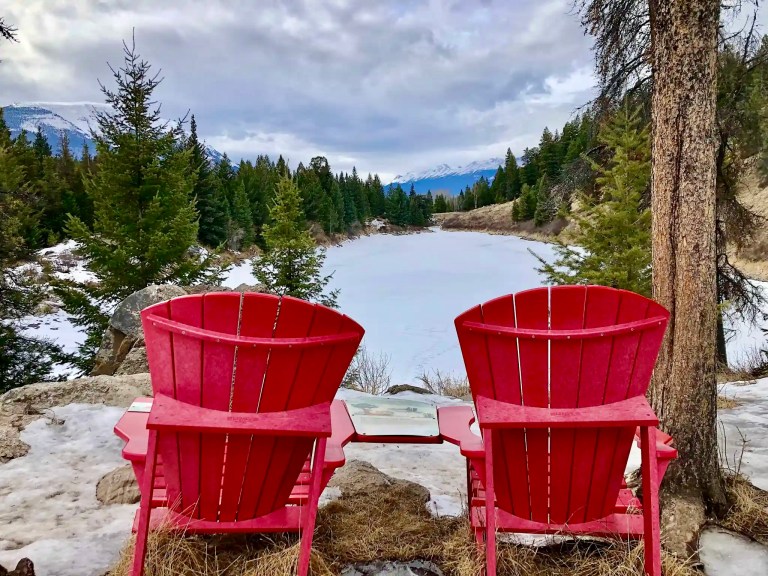
Are you new to cold weather hiking? Wondering what to wear winter hiking to stay warm and happy? With many options to choose from, personal preference plays a role in selecting your winter hiking outfit, and there are several important factors to keep in mind when preparing to hike in the snow. As I’ve gotten more into winter hiking, I have found gear that works well for me. Here are some winter hiking tips and tricks to keep you warm outdoors!

Last Updated: January 27, 2024
I’ve been winter hiking in Canada for several years, testing our different winter clothing along the way. Choosing what to wear winter hiking for beginners can seem daunting at first. That’s why I put together this information to get started. Moving from the East Coast of Canada to Alberta, I’ve had to learn more about hiking in and around the Rock Mountains (including potential avalanche risk!). If you’re just starting out, take your time and become informed before heading out on a winter day hike.
This post includes affiliate links. If you purchase through one of the links, I may receive a percentage of the sale at no extra cost to you. Thanks for your support!

Winter Hiking For Beginners

Are you new to cold weather hiking in Canada? If so, that’s great! Winter hiking can be extremely fun and rewarding when you’re prepared. However, if you’re not sure what to wear winter hiking or what to bring, you could be in for a miserable (and even dangerous) experience. Before you head out, consider the possible scenarios and weather conditions, and always layer up to try to be ready for anything (see below). Aside from choosing winter hiking attire, you’ll also want to bring day hiking essentials. Whether I’m out for a day of cross-country skiing or hiking for a few hours in the mountains, I typically bring the same or similar things. Being prepared for winter conditions makes all the difference!
Read next: 10 Day Hiking Essentials: What to Bring on a Hike
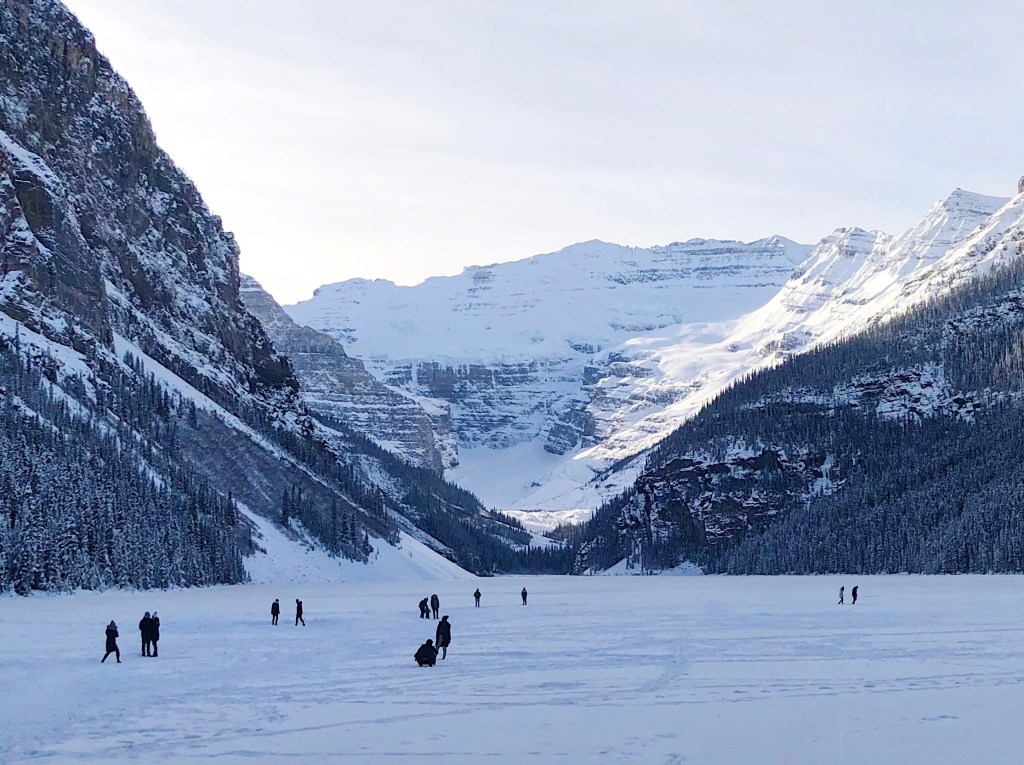
What To Wear Winter Hiking

When choosing what to wear winter hiking, it’s important to take weather and temperature, hiking distance, and trail difficulty into consideration. Before you go warm up the car, find the answers to questions like: What’s the current temperature and weather forecast? Am I heading out on a long or short trail? What are the potential risks on this trail? Am I going into avalanche country and is it safe to do so? Am I going to sweat a lot on this hike?
Anticipate potential risks and scenarios that can occur when hiking in freezing temperatures, including the risk of hypothermia and frostbite. Let’s be prepared, friends. To lower my risk of forgetting something important, I tend to leave my day pack ready to go during hiking season. If you have a hard time finding motivation for the trails, this approach can cut down on preparation time and help you stay motivated to get outside more often. Keep reading for specifics on what to wear winter hiking.
Read next: The Chester Lake Hike in Winter Is Better Than Most

Winter Hiking Clothing Layers
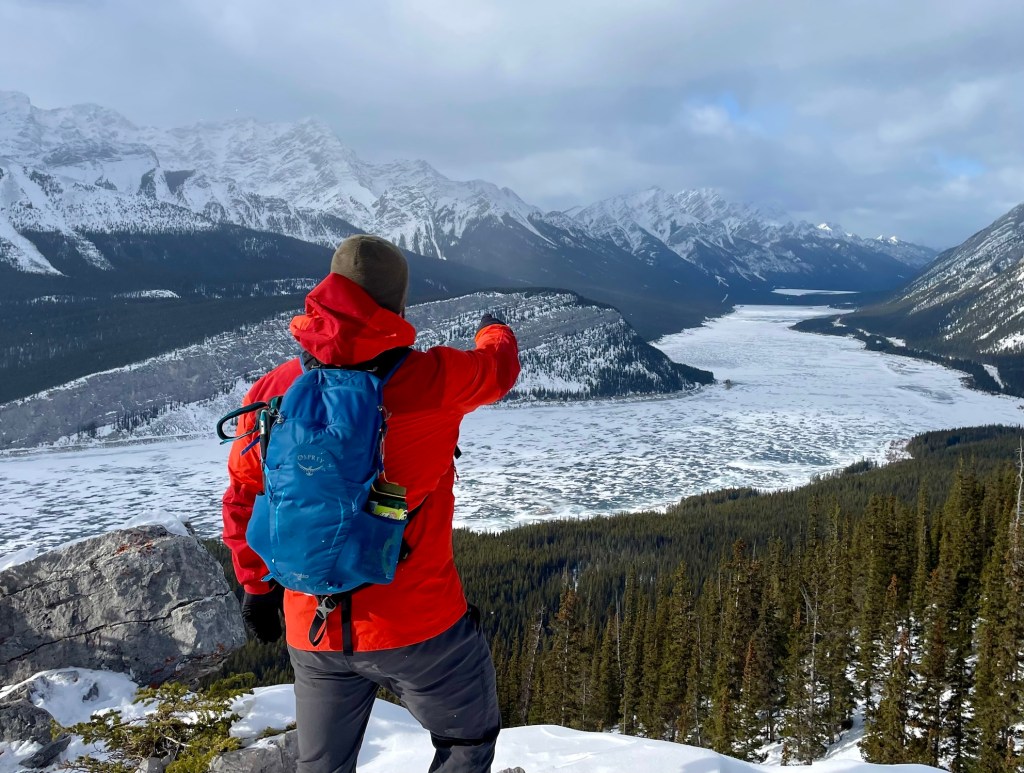
Have you heard about winter hiking layers? Properly layering winter clothing is the best way to maintain your warmth outside. This approach also helps you regulate body temperature by removing or adding layers as needed and simplifies what to wear winter hiking. At this point in my life, I always use the layering system whenever I’m spending time outdoors in cold weather. If you’re not warm and happy, you won’t last very long on those winter trails!
Is this your first time hearing about layers for winter hiking? No problem! Here is everything you need to know to choose a winter hiking outfit that will keep you warm:
Inner (or Base) Layer: The inner layer works to wick sweat away from your body and keep you dry for longer. One of my personal go-to base layers is this Patagonia Capilene Midweight Zip-Neck (I’ve had it for years!). I’ll typically throw this baselayer over a Merino wool t-shirt. On very cold days (-20 to -30°C), I’ll wear my Icebreaker base layer leggings for extra warmth.
Mid (or Insulation) Layer: The mid-layer adds insulation to your body and holds the heat to keep you warm. Depending on the temperature, I either like to use an Eddie Bauer fleece sweater or, when it’s colder, my Patagonia Down Sweater. However, just so you know, down insulation loses warmth when it becomes wet. If you’re planning high-intensity activity, I would opt for a synthetic mid-layer like my Arc’teryx Proton Hoody or my Acr’teryx Atom AR Hoody. If it’s really cold, I’ll put on fleece-lined pants or snow pants as well. Generally, when I’m hiking in the snow, I keep my down sweater in my pack and pull it out when I stop for a rest. When it’s hovering above zero, I’ve been known to remove my mid-layer altogether and just use my base and shell!
Outer (or Shell) Layer: The outer layer protects you from the elements. You’ll want a shell that’s waterproof and highly effective against the wind. Shells typically also help to retain body heat and keep you warmer. I have a couple of go-to shells. First, the Arc’teryx Beta LT is my go-to rain jacket and shell in the summer and winter months. If I want something more durable and resistant to punctures from trees and other hazards, I’ll throw on my bright-orange Arc’teryx Beta AR.
When it comes to warm and dry feet, I trust and rely on Icebreaker Merino wool socks. Unlike cotton, Merino wool will keep your feet warm if your boots and socks get wet (even from sweat). For my winter hiking boots, I often just use my Scarpa Kailash Waterproof Boots or my Merrell Cham 8 Thermo Waterproof Hiking Boots. I typically don’t like a heavy hiker, and these feel lighter on my foot (plus waterproof and durable!).
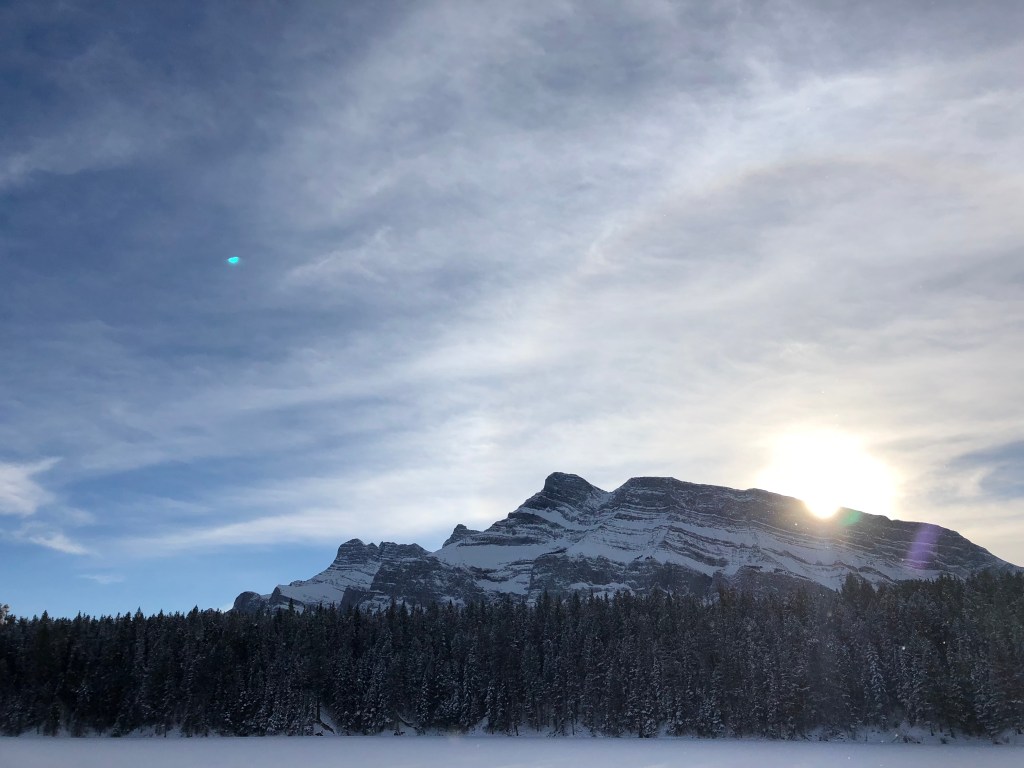
Choosing Your Winter Hiking Day Pack

If you have a day pack that you use in the summer, that could be a great option for the wintertime, too! Not sure what pack size to bring? There’s no one-size-fits-all answer. Pack size largely depends on what you plan to carry, and I typically carry a bit more winter hiking gear. For example, my Gregory Stout 30-litre pack is large enough for my gear and camera equipment, but I can also use my Osprey Hikelite 18 when I need less space.
No matter what size pack you choose, take the time to find something that’s comfortable and supportive (with a solid frame). Trust me, you’ll have a much higher chance of returning to the trails if your pack is comfy. After all, selecting the right pack is one of the most important decisions you’ll make as a hiker (Right up there with choosing hiking boots/shoes!).
Read next: Rawson Lake Hike in Kananaskis, Alberta

Winter Hiking Packing List
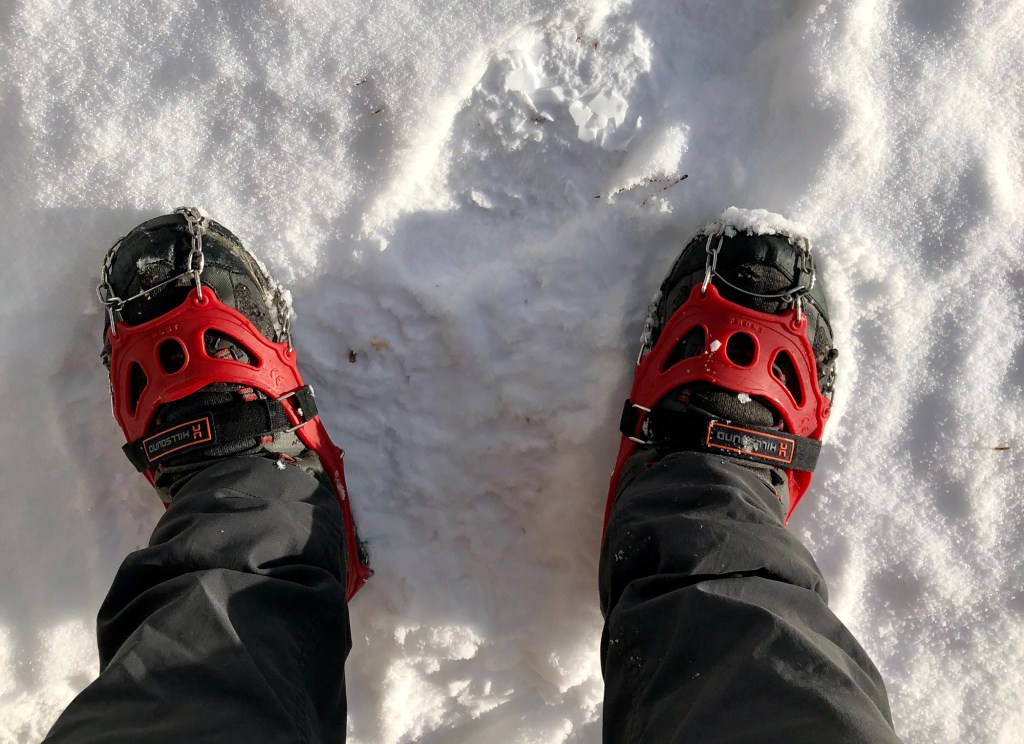
Here’s my winter hiking packing list. If you’re looking for specific gear recommendations, the links below are from gear I own and use regularly. Feel free to drop a comment if you have a specific question or want to know more.
- Trail Crampons — If you’re hiking in snow or ice, trail crampons make such a difference. I use these Hillsound crampons (and love them!).
- Trekking poles — I have been really impressed with my lightweight, carbon hiking poles from Komperdell. They have a solid warranty, too.
- Siltarp (shelter) — pack a siltarp or emergency shelter. If you’re injured and need to stay put, an emergency tarp can help keep you warm.
- First aid kit — I always have a little first aid kit in my pack, usually modified from the Adventure Medical Kit (ultralight) when I’m solo.
- Whistle — bring a signalling device. Can’t go wrong with a Fox 40.
- Fire — Always bring waterproof matches, lighter, or flint.
- Rope — Paracord has so many uses in an emergency.
- Knife — I carry the Morakniv fixed-blade.
- Headlamp — I trust my Petzl headlamp.
- Nutrition — I tend to bring Clif bars, GORP (good ol’ raisins and peanuts), or high-energy chews. Or how about hot chocolate?
- Hydration bladder — My Osprey 2L Water Reservoir is great for most trips. I also tend to carry my trusty Nalgene.
- Water filtration — If it’s not too cold, I bring the MSR TrailShot Microfilter. I would also boil water or use purification tablets.
- Navigation — I tend to use my phone GPS (and battery pack) for day hikes, with apps like AllTrails and Gaia. Good idea to bring a compass and map, too.
- Bear spray — Did you know that bears don’t truly hibernate? Winter encounters have been known to happen. Carry bear spray on the hiking trails.
- Light toque / gloves — I like my OR gloves.
- Down mittens, extra fleece toque, balaclava — when it’s cold and windy, I like this Icebreaker balaclava.
- Down or synthetic winter mid-layer — I really like my Patagonia Down Sweater, Arc’teryx Proton Hoody, or Acr’teryx Atom AR Hoody.
- Outer layer / shell — I use either my Arc’teryx Beta LT or Arc’teryx Beta AR.
Optional gear:
- Stove — I like to bring my Jetboil Flash to boil water for hot chocolate… yum! If I don’t want to carry my stove, I can just leave it in the car for the end of the hike.
- Thermos — I sometimes carry a Hydroflask with a hot drink.
- Camera & equipment
There you have it! That’s what I tend to carry in my winter hiking pack. Before I head out, I always double-check to make sure I have the best winter hiking gear for the conditions. And I’ll often modify what winter hiking gear I choose to bring, depending on the weather and the intensity of the winter activity.

Dogs in Snow — Winter Hiking With Dogs

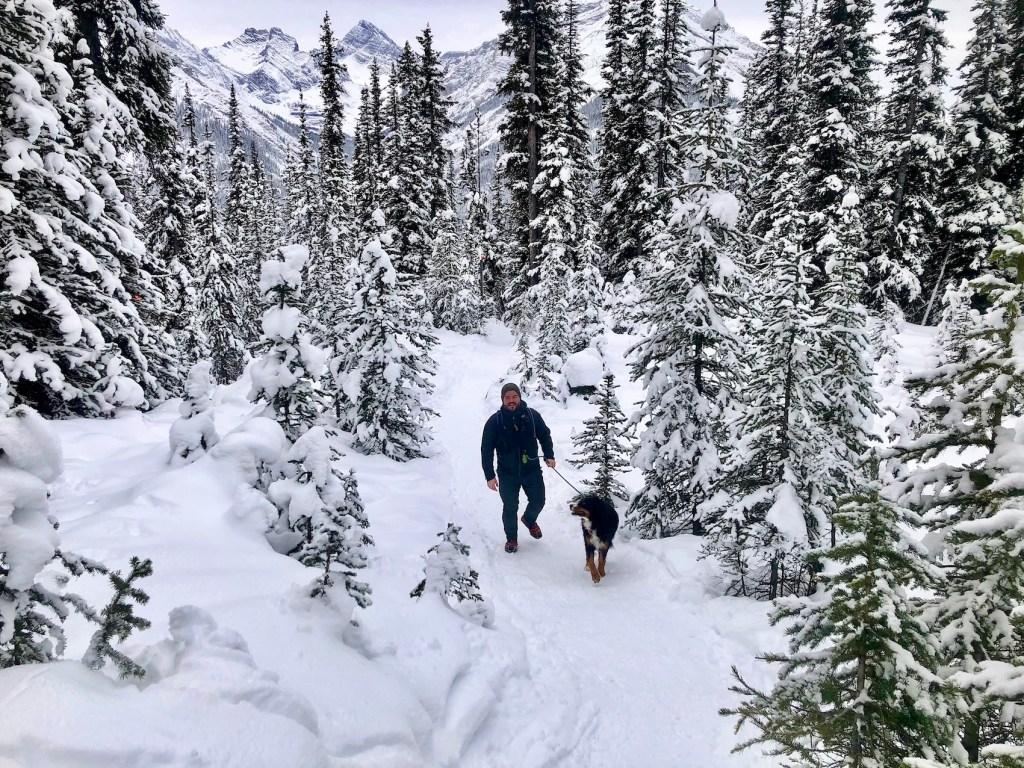
Do you have a “winter dog”? Bella the Berner always loved the wintertime, never happier than when she was bouncing around in the snow. Over the years, we had several chances to explore in the snow and head out on winter hiking adventures.
If you’re new to winter hiking with dogs, you might be wondering where to start. It’s crucial to pay attention to your pup’s needs. For example, even a thick-coated Bernese mountain dog might want dog booties in freezing temperatures. And frankly, not all dogs enjoy hiking in the snow as much as we do. Do some research to understand your dog’s needs before you start winter hiking.
If you choose to bring your four-legged friend, be sure to pack dog booties if you’re hiking in extreme temperatures. Bring some snacks for your pup to keep their calories and energy levels up. Remember, most provincial and national parks require you to keep your dog on a leash. I used this RuffWear leash and really loved it. And lastly, don’t forget hydration for your pup (I used to carry a bowl like this) or choose a hike with access to water.
Read next: Midland Ice Caves: Family-Friendly New Brunswick Hike
Things To Do in Winter in Canada (Check Conditions First!)

Are you looking for things to do outdoors this winter? Here are a few suggestions for things to do in winter in Canada. Don’t forget the hot chocolate!
- The Rawson Lake Hike in Kananaskis Country
- Parlee Brook Amphitheatre Trail Near Sussex, New Brunswick
- Mount Engadine Lodge: Amazing Winter Getaway in Alberta
- Tunnel Mountain Trail: Winter Hiking in Banff, Alberta
- The Chester Lake Hike in Winter Is Better Than Most
- XC Skiing Moraine Lake Road in Banff National Park (Perfect For Beginners!)

Winter Hiking Tips Video
Thanks for reading! Are you new to winter hiking in Canada? Did you find some helpful information? What would you add? Leave a comment below!
Save this for later? Hover over the image to add to Pinterest!

Thomas Coldwell has always been fond of the outdoors. He loves hiking, paddling, and camping, and thoroughly enjoys creating outdoor adventure resources for people like you. Originally from Nova Scotia, Thomas has lived in four Canadian provinces (NS, NB, ON, AB) and has travelled in 20 countries and counting.